
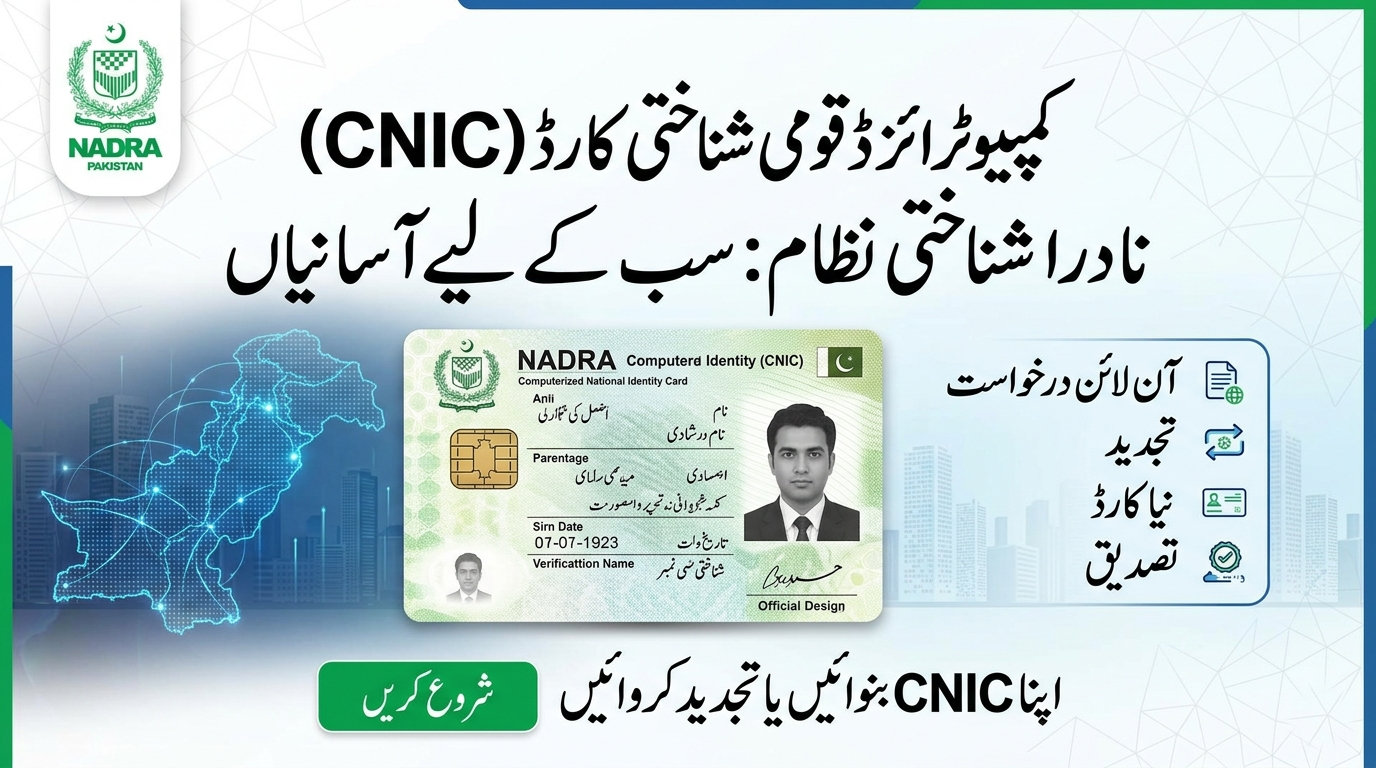
A Computerised National Identity Card (CNIC) is Pakistan’s official identity document issued by NADRA under the NADRA Ordinance, 2000. It serves as legal proof of citizenship, identity, and nationality. Pakistani citizens aged 18 and above whether inside or outside the country are eligible to apply.
Getting your national identity card sorted shouldn’t feel like navigating a maze. Yet for many Pakistanis whether applying for the first time, renewing an expired card, or updating personal details the process can feel unclear. Which card type do you need? What documents do you have to bring? Can you apply online?
This guide answers all of that. Drawing directly from NADRA’s official framework, it walks you through everything you need to know about the Computerised National Identity Card: what it is, the different types available, who qualifies, what documents you need, and exactly how to apply whether online via the PakID app or in person at a NADRA Registration Centre.
By the end, you’ll know precisely what to do and what to bring, saving yourself the frustration of a wasted trip or a rejected application.
What Is a CNIC and Why Does It Matter?
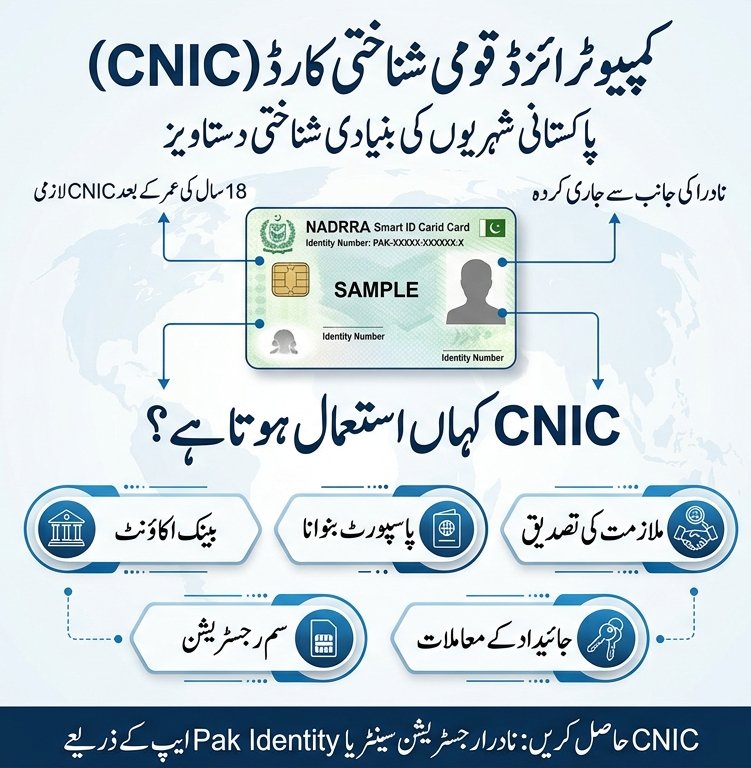
The Computerised National Identity Card, commonly referred to as a CNIC, is the primary identity document issued to adult Pakistani citizens. NADRA (National Database and Registration Authority) issues it under Section 9 and 10 of the NADRA Ordinance, 2000.
A CNIC is more than a card with your photo on it. It functions as official proof of three distinct things: your identity, your nationality, and your legal status within Pakistan. Without one, accessing most public and private services in Pakistan banking, employment, voting, property registration, and more becomes significantly harder.
Think of the CNIC as the foundation of your legal identity in Pakistan. Almost every formal interaction with the state, and many with the private sector, requires it.
What Are the Different Types of CNICs Issued by NADRA?
NADRA currently issues three main types of CNICs. Each serves the same core purpose but differs in technology, security features, and physical material.
Standard CNIC (Teslin-Based)
The standard CNIC is the traditional identity card printed on Teslin material. This is the most widely issued form and continues to be valid for Pakistani citizens across the country and abroad.
Smart CNIC (Polycarbonate)
The Smart CNIC is an upgraded version of the standard card. It is made from polycarbonate material and contains a secure microchip embedded within the card. The microchip stores the cardholder’s data and provides enhanced security features, making it significantly harder to counterfeit. It also offers improved durability compared to the Teslin version.
CNIC with QR Code
The QR Code CNIC is the latest addition to NADRA’s identity card lineup. It includes a machine-readable QR code that enables faster verification and real-time authentication of the cardholder’s data. This is particularly useful for businesses, government departments, and any scenario where quick identity confirmation is needed.
NADRA also issues Urdu and Sindhi language versions of the CNIC for those who prefer documentation in their regional language.
Who Is Eligible to Apply for a CNIC in Pakistan?
CNIC eligibility is straightforward. The card is issued to all Pakistani citizens—whether residing within Pakistan or abroad who meet the following criteria:
- Have attained the age of 18 years
- Have not previously been registered with NADRA, OR
- Are an existing holder of a Child Registration Certificate (CRC) or Juvenile Card
In short, if you are a Pakistani citizen turning 18 or older and do not yet hold an adult CNIC, you are eligible to apply.
What Documents Do You Need to Apply for a New CNIC?
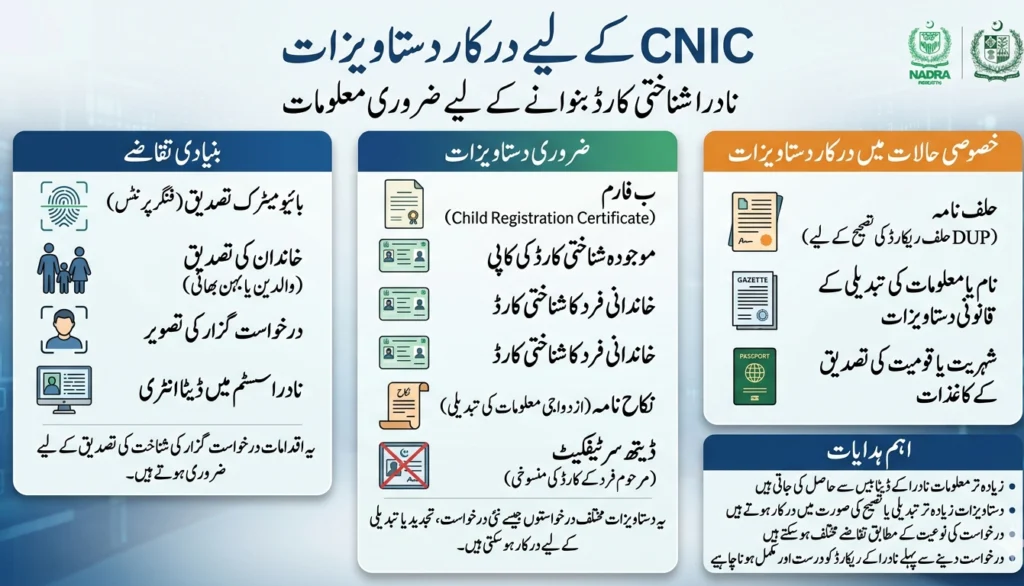
Gathering the right documents before your visit will save you significant time. NADRA requires the following for a new CNIC application:
- Identity proof from family: The identity card number of a parent or blood relative, OR biometric witness by an existing ID holder along with undertaking “B” (as per NADRA’s format). This alternative applies specifically to System Independent cases where no blood relative is available.
- Birth certificate: A computerised birth certificate, verified by UC (Union Council), Municipal Committee, or Cantonment—OR a Citizenship/Naturalization certificate.
- Biometric verification: Biometric verification from a parent or blood relative, OR attestation of CNICF as per Regulation 9 (a–h).
It is worth checking NADRA’s official website for the most current fee schedule and processing timelines before applying, as these are subject to change.
How to Apply for a New CNIC at a NADRA Registration Centre
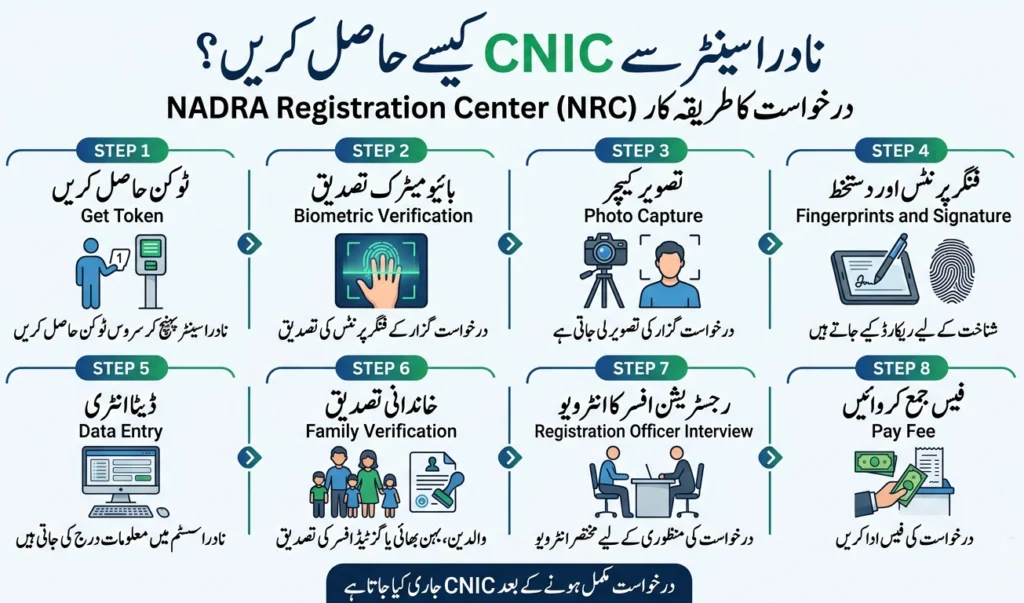
Applying in person at a NADRA Registration Centre (NRC) remains the most common route for first-time applicants. Here is a step-by-step overview of the process:
- Visit your nearest NADRA Registration Centre with all required documents.
- Submit your application form along with supporting documentation.
- Provide biometric data, including fingerprints and a photograph, captured on-site.
- Pay the applicable fee based on your chosen processing speed (normal, urgent, or executive).
- Receive your token/tracking number to monitor your application status.
- Collect your CNIC once it is ready, or opt for home delivery where available.
Processing times vary depending on the service tier selected. NADRA’s official website provides up-to-date fee and processing time information.
How to Apply for a CNIC Using the PakID Mobile App
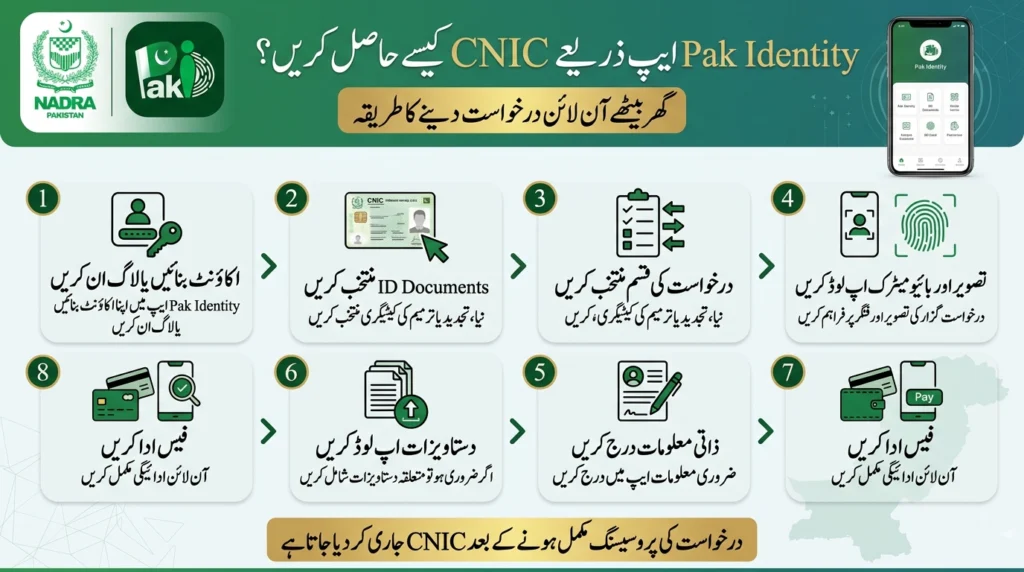
NADRA’s official mobile application, PakID, allows applicants to begin the CNIC process digitally reducing the need for multiple visits to a registration centre.
Here is how the process works through PakID:
- Download the PakID app from the App Store (iOS) or Google Play (Android).
- Create your account or sign in using your credentials.
- Select “New CNIC” from the available services menu.
- Fill in your personal details as prompted by the application form.
- Upload your documents using the app.
- Visit a NADRA Registration Centre if required biometric verification and photograph capture typically necessitate an in-person visit.
- Track your application status in real time through the app.
PakID streamlines the pre-registration process considerably, especially for applicants who want to prepare their documentation and fill in forms before physically visiting a centre.
Other CNIC Services Available Through NADRA
Applying for a new CNIC is just one of several identity services NADRA manages. Through both the PakID app and NADRA Registration Centres, citizens can also:
- Renew an expired CNIC
- Update or modify personal details (such as address, marital status, or name changes)
- Reprint a CNIC or report a lost card
Each service has its own document requirements and fee structure. It is advisable to check NADRA’s official portal for service-specific guidance before visiting.
Getting Your CNIC: What You Need to Know Before You Apply
Applying for a CNIC does not have to be complicated. Here is a quick summary before you get started:
- Confirm you meet the age and registration eligibility requirements.
- Gather your documents in advance: birth certificate, parent/relative ID information, and biometric witness details if needed.
- Decide whether you will apply via PakID (to pre-fill your application) or go directly to an NRC.
- Check current fees and processing times on NADRA’s official website, as these are updated periodically.
- Know that biometric verification always requires an in-person visit, regardless of whether you initiated your application online.
Your CNIC is a foundational document worth getting right the first time.
Frequently Asked Questions About CNIC and NADRA
What is a CNIC in Pakistan?
A CNIC (Computerised National Identity Card) is the official national identity document issued by NADRA to Pakistani citizens aged 18 and above. It serves as legal proof of identity, nationality, and legal status under the NADRA Ordinance, 2000.
What is the difference between a standard CNIC and a Smart CNIC?
The standard CNIC is printed on Teslin material, while the Smart CNIC is made from polycarbonate and includes an embedded microchip with enhanced security features. The Smart CNIC is more durable and harder to counterfeit.
Can I apply for a CNIC from abroad?
Yes. CNIC is issued to all Pakistani citizens, whether residing within Pakistan or abroad. Overseas Pakistanis can apply through Pakistani missions and embassies, or through NADRA’s official channels.
What happens if I lose my CNIC?
You can apply for a reprint through a NADRA Registration Centre or via the PakID app by selecting the “Lost Card” service option. Standard documentation and an applicable fee will be required.
Do I need to visit a NADRA centre if I apply through the PakID app?
In most cases, yes. While PakID allows you to fill in personal details and upload documents digitally, biometric verification and photograph capture typically still require an in-person visit to a NADRA Registration Centre.
How long does it take to receive a CNIC after applying?
Processing times vary depending on the service tier you choose normal, urgent, or executive. For current timelines and fees, refer to NADRA’s official website.
What is a Child Registration Certificate (CRC) and how does it relate to the CNIC?
A CRC is an identity document issued to Pakistani children before they turn 18. Once a CRC holder reaches adulthood, they are eligible to apply for a standard CNIC.