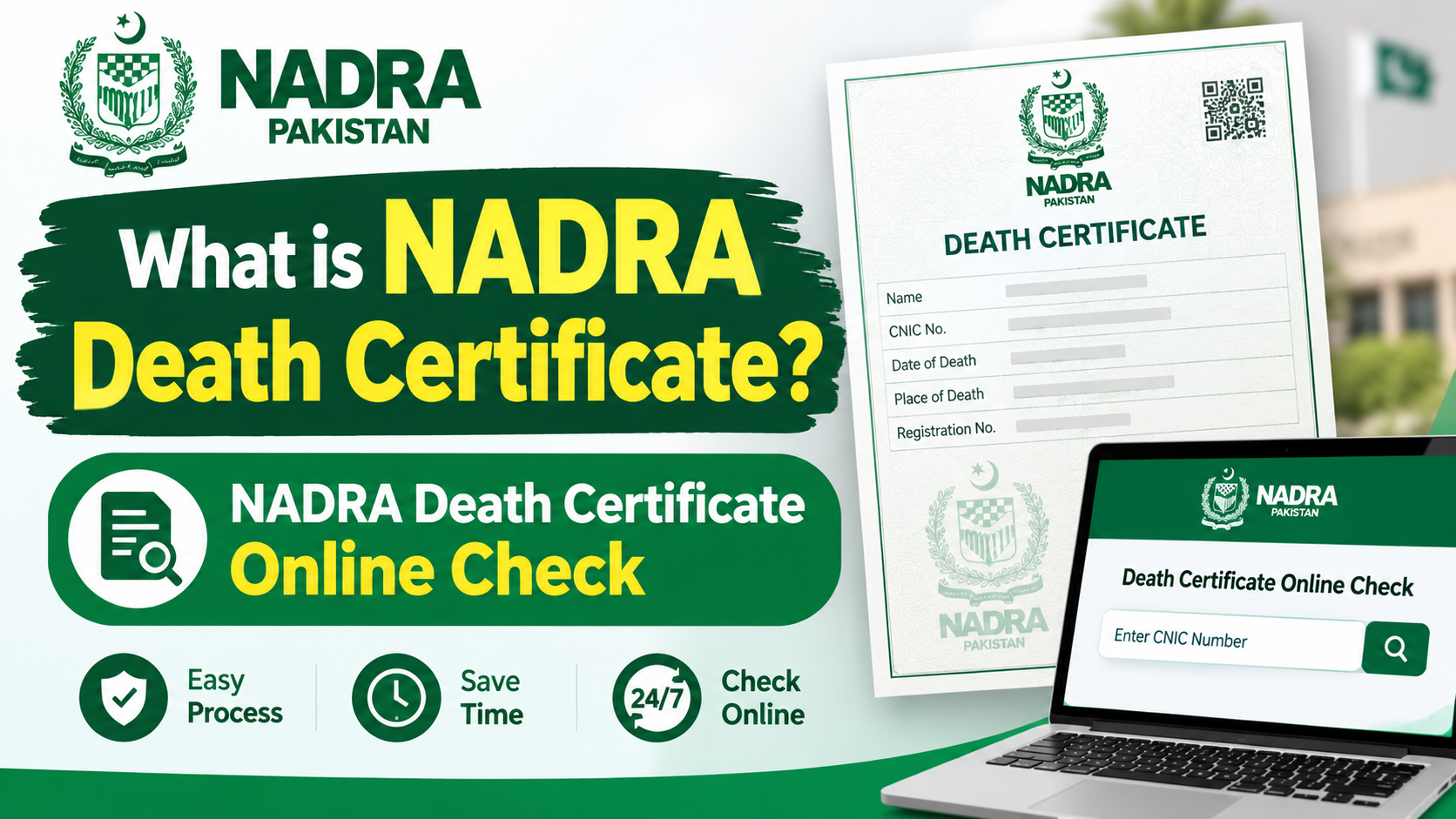
To perform a NADRA death certificate online check, scan the QR code printed on the computerized certificate using a smartphone camera. This directs you to NADRA’s or the provincial local government’s database, where you can match the displayed details against the physical document. Provincial portals and the SMS service (send a CNIC number to 7000) offer additional verification options.
Losing a loved one is hard enough without the paperwork that follows. Yet within days of a death, family members are often expected to gather documents, visit government offices, and settle legal matters all while grieving. At the center of nearly every one of these tasks sits a single document: the death certificate.
In Pakistan, a valid death certificate issued through the National Database and Registration Authority (NADRA) system is required for everything from closing bank accounts to transferring property. But simply having the certificate isn’t enough. You also need to know it’s genuine and legally recognized, especially since fraudulent certificates have been used in property and insurance scams.
The good news is that Pakistan’s shift toward digital civil records has made verification far easier than it used to be. This guide walks through how to check a NADRA death certificate online, what separates a valid computerized certificate from an outdated one, and what steps to take next once you have it.
What Is a Computerized Death Certificate?
Before verifying anything, it helps to know what a legitimate document actually looks like. Death certificates used to be handwritten forms issued by local Union Councils. These were inconsistent, easy to alter, and offered no real way to confirm authenticity.
That changed with NADRA’s Civil Registration Management System (CRMS). While NADRA centralizes the underlying data, certificates are still issued locally — through Union Councils (UCs), Tehsil Municipal Administrations (TMAs), or Cantonment Boards, depending on where the death was registered.
A valid computerized death certificate includes:
- A unique CRMS ID or registration number
- The deceased’s full details (name, CNIC, father’s or husband’s name)
- The date and cause of death
- A QR code for instant digital verification
- Watermarks and other security features designed to prevent forgery
If a certificate is missing these features, particularly the QR code, that’s a red flag worth investigating further.
How to Verify a NADRA Death Certificate Online
NADRA doesn’t provide a public search tool where you can look up a death record by name alone — and for good reason. Doing so would expose sensitive personal data. Instead, verification relies on the unique identifiers printed on the certificate itself.
Can You Verify a Death Certificate Using the QR Code?
Yes, and it’s the most reliable method available. Every computerized certificate generated through the CRMS system carries a QR code. Here’s how to use it:
- Open the camera app or a QR scanner app on your smartphone.
- Scan the code printed on the certificate.
- The scan should redirect you to the official NADRA or provincial local government database.
- Compare the details shown on screen with the physical document.
If the names, dates, and CNIC number match, the certificate is authentic. If the scan returns “Record Not Found” or shows information that doesn’t match, treat the document with suspicion.
Are There Provincial Apps for Verifying Death Certificates?
Several provinces have started rolling out their own digital verification tools. In Punjab, for instance, residents can use the “Baldia Online” app or the Local Government & Community Development (LGCD) department website, which includes a “Verify Certificate” option where you enter the CRMS number printed on the document.
Sindh, Khyber Pakhtunkhwa, and Balochistan are progressively introducing similar digital services. Where a dedicated portal isn’t yet available, the QR code remains the most dependable verification method.
How Do You Check Someone’s Death Status via SMS?
If you specifically need to confirm whether NADRA has recorded someone as deceased in its central database rather than verify a physical certificate the SMS service is a fast option:
- Open your phone’s messaging app.
- Type the deceased’s CNIC number without dashes.
- Send it to 7000.
The reply will indicate the cardholder’s status. If the death has been properly processed and CNIC cancellation applied, the response should reflect that update.
Death Certificate vs. CNIC Cancellation: What’s the Difference?
Families often confuse these two documents, but they serve different purposes.
Union Council Death Certificate: This is issued by the local municipal authority using NADRA’s system and formally records the death in the civil registry. It’s the document required for insurance claims, burial procedures, and initial legal steps.
CNIC Cancellation: After obtaining the death certificate, the next step is visiting a NADRA registration center — or using the Pak-Identity portal for overseas Pakistanis — to cancel the deceased’s ID card. NADRA then issues a Cancellation Certificate, which is typically required for succession certificates and inheritance distribution.
Skipping the CNIC cancellation step is one of the most common oversights families make, and it can delay inheritance proceedings significantly.
How Can Overseas Pakistanis Apply for a Death Certificate Online?
For Pakistanis living abroad, physically visiting a Union Council isn’t realistic. NADRA addresses this through the Pak-Identity online portal, which handles CNIC cancellation and issuance of the cancellation certificate remotely.
The process works as follows:
- Register for an account on the Pak-Identity website.
- Select the category “Cancel CNIC due to death.”
- Upload documents, including the death certificate issued by the host country (such as the UK, USA, or UAE) and the original CNIC of the deceased.
- Complete verification, which requires two witnesses this can be done online using their own CNIC validation.
- Submit and pay the applicable fee. The cancellation certificate is then mailed or made available for download, depending on current procedures.
Why Does Online Verification of Death Certificates Matter?
Verifying a death certificate isn’t just a bureaucratic checkbox. Fake or altered certificates have surfaced in property fraud schemes and life insurance scams, making verification a genuine safeguard for families.
- Bank settlements: Banks independently verify death certificates with NADRA before releasing account funds to heirs.
- Property transfer: Real estate transactions require a verifiable certificate to confirm the rightful owner has passed before property moves to successors.
- Remarriage: A widow or widower needs a verified death certificate to update their marital status to “Widowed” in NADRA’s records before remarrying legally.
Choose the QR code method if you have the physical certificate in hand — it’s the fastest and most direct route. Choose the SMS status check if you only need to confirm someone’s status in NADRA’s system without reviewing the full document.
Frequently Asked Questions
Can I check a death certificate by name?
No. NADRA does not allow searches by name alone, in order to protect citizen privacy. You generally need the CRMS number or the QR code printed on the document to verify it.
How long does it take to get a computerized death certificate?
If all required documents the hospital death report, burial slip, and applicant’s CNIC are in order, the Union Council typically issues the computerized certificate within 3 to 7 working days.
Is a handwritten death certificate still valid?
Generally, no. Old handwritten certificates are no longer accepted for official purposes like banking or visa applications. They need to be taken to the current Union Council and digitized into the NADRA CRMS system.
What documents are needed to apply for a death certificate?
Applicants typically need the hospital death certificate (or an affidavit if the death occurred at home), the deceased’s original CNIC and a copy, the graveyard slip as proof of burial, and the CNIC of the blood relative submitting the application.
Ensuring Your Records Are Straight
Handling the legal side of a death is never easy, but digital verification tools have made the process considerably more manageable. Scanning the QR code on a certificate or using a provincial local government app can confirm authenticity in seconds, without a trip to a government office.
Once the death certificate is in hand, don’t stop there. Proceed to cancel the deceased’s CNIC with NADRA. This final step closes the loop, protects against identity theft, and clears the way for inheritance proceedings to move forward without unnecessary legal delays.